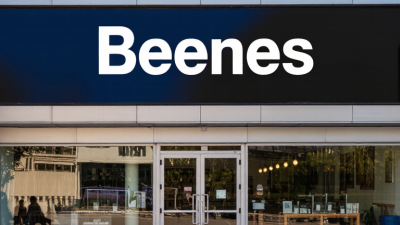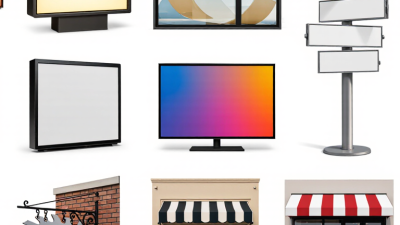
Choosing among China’s top 10 Lighted Business Signs manufacturers requires more than comparing factory prices. A bright storefront sign represents your brand before customers enter. Its colors, lettering, brightness, and nighttime visibility can influence trust within seconds. Dan Antonelli, a respected sign designer and president of Graphic D-Signs, has often said, “Your sign is your first impression.” That simple sentence remains highly relevant for retailers, hotels, restaurants, and service businesses.
This guide examines leading Chinese manufacturers through practical buying criteria. These include LED quality, cabinet construction, acrylic or aluminum materials, customization ability, production experience, packaging, and after-sales support. It also considers whether a supplier can provide drawings, samples, wiring details, installation guidance, and suitable certifications for the destination market. A low quotation may look attractive. Hidden costs can appear later through uneven illumination, weak waterproofing, poor color consistency, or difficult replacement parts.
The ranking is not presented as an absolute verdict. Supplier capabilities change, and a factory excellent for channel letters may not suit large pylon signs. That distinction matters. We will compare manufacturing strengths, typical applications, export experience, and communication reliability. Product photos alone are not enough evidence. Ask for recent project references, nighttime videos, material specifications, and clear warranty terms.
There is also room for judgment. Some manufacturers communicate professionally but reveal limited technical detail. Others offer impressive samples yet respond slowly after payment. This guide highlights both strengths and uncertainties, helping buyers form a more balanced decision. The best Lighted Business Signs partner should deliver visible quality, dependable engineering, and consistent support—not merely a competitive first quote.
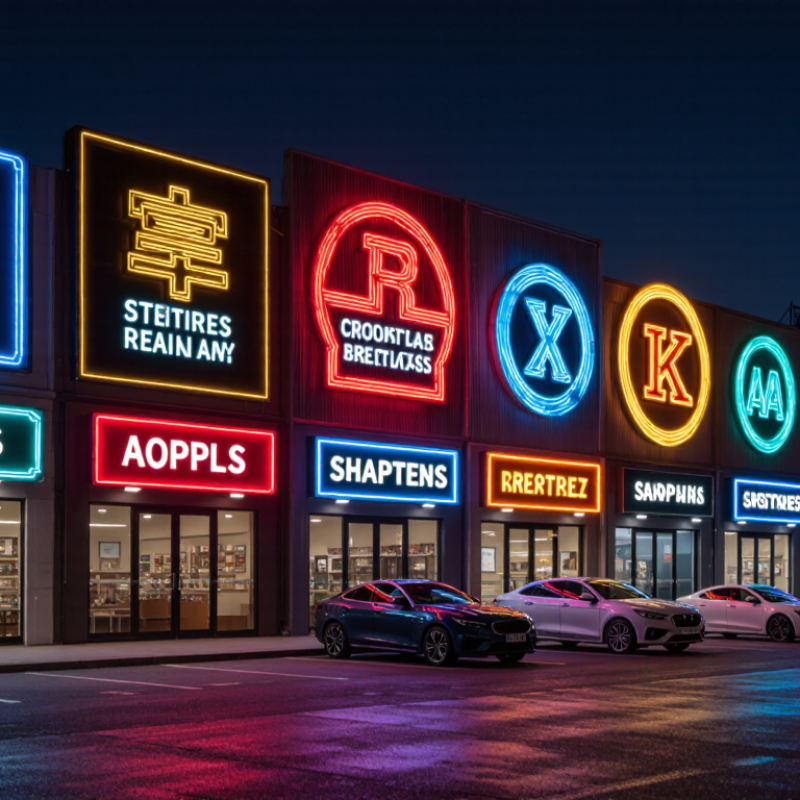
Lighted business signs are best understood through three parts: the LED source, the cabinet, and the sign face. Each affects how a sign looks, performs, and fits its location. A bright panel cannot compensate for uneven lighting or a poorly sealed enclosure. Small details matter.
LED modules or strips sit behind or within the sign face. Their spacing, color temperature, and output influence brightness and uniformity. For example, widely spaced modules may leave dim patches near the edges. Ask how the sign will appear at dusk and in direct sunlight, not just in a showroom. Brighter is not always better.
The cabinet holds the electrical components and protects them from rain, dust, and everyday wear. Its depth, material, and access panels affect installation and maintenance. The sign face, often made from translucent acrylic or polycarbonate, carries the message and diffuses light. Letter size, surface finish, and graphic contrast all shape readability from the street. A dark face may look crisp by day but lose clarity after sunset. That trade-off deserves attention.
Specifications can sound reassuring, yet real viewing conditions vary by distance, weather, and surrounding light. Check samples when possible, and treat promised performance as something to verify.
China’s leading lighted business-sign manufacturers differ less by appearance than by production depth. Some focus on compact acrylic signs for shopfronts, while others handle channel letters, illuminated panels, and large-format displays. Their product range matters: a supplier offering several sign types may simplify sourcing, but specialization can bring tighter control over one production process.
Capacity is not just factory size. Ask how many cutting, bending, and assembly lines operate, and whether LED testing happens before packing. A capable manufacturer should explain material options, typical lead times, packaging methods, and how it manages custom drawings. Request recent project photos and a sample specification sheet. Details matter.
The strongest candidates often combine in-house fabrication with quality checks across wiring, brightness, and finish. Still, “top ten” rankings are difficult to verify without comparable output data. Published capacity may describe equipment potential, not actual monthly shipments. That distinction is easy to miss. Buyers should compare like with like, including order size and product complexity. A small run of curved letters is not equivalent to hundreds of standard light boxes. Even a well-equipped factory can struggle when specifications change late, so clear drawings and approval samples remain essential.
When comparing China’s top 10 lighted business sign manufacturers, ask for measured performance, not just “high efficiency.” The U.S. Department of Energy’s 2022 Solid-State Lighting R&D report describes LED package efficacies around 200 lm/W in advanced products; complete sign systems usually deliver less because drivers, optics, heat, and diffusion consume output. Request system-level lm/W, measured at the sign face. A bright module can still waste light behind a thick acrylic panel.
Quick comparison: Power density makes quotations easier to compare. Divide total input watts by illuminated area: a 2 m² sign using 160 W consumes 80 W/m². Ask suppliers to state operating conditions and include driver losses.
For rated life, request the LED module’s LM-80 test data and TM-21 projection, alongside the driver’s stated life. These figures are not identical to a guaranteed service life. The DOE’s LM-80 guidance evaluates lumen maintenance over time; it does not prove every finished sign will last the same duration.
Check the thermal details, too.
A sealed cabinet in direct sun may run hotter than a lab sample. Small caveat: quoted efficiency figures can be awkward to compare unless test methods match. That is worth checking.
When comparing China’s top 10 lighted business sign manufacturers, inspect enclosure test evidence, not just product photos. IEC 60529 defines IP65 as dust-tight protection plus resistance to water jets. Its IPX5 test uses a 6.3 mm nozzle delivering 12.5 litres per minute. IPX6 raises the flow to 100 litres per minute through a 12.5 mm nozzle. These figures come from the IEC 60529 enclosure-classification standard; they describe controlled tests, not guaranteed service life outdoors.
Ask suppliers for reports identifying the exact sign enclosure, cable entries, seals, and test conditions. A rating may not apply after drilling new mounting holes or replacing a gasket. Check corners and door seams closely. Small gaps matter. For an IPX6 test, the standard specifies a 2.5–3 metre spray distance and at least three minutes of exposure. Yet a pass does not reproduce every site condition, such as wind-driven rain, UV exposure, or repeated maintenance. I would also verify that the tested sample matches the production design; paperwork alone can be imperfect evidence.
Water-jet test flow rate is 12.5 L/min for IPX5 and 100 L/min for IPX6. Both IP65 and IP66 include the same IP6X dust-tight rating; their second digit indicates different water-jet protection levels. Verify the enclosure’s documented rating for the intended installation.
China Top 10 Lighted Business Signs Manufacturers?
When evaluating Chinese lighted business sign manufacturers, certifications deserve more than a quick logo check. Ask for current certificates, issuing bodies, product scope, and matching model numbers. CE may support European market access, while UL or ETL documentation may suit North American projects. RoHS records can clarify restricted materials. ISO 9001 shows process control, but it does not guarantee excellent sign construction. Verify every document independently.
Warranty terms often reveal practical reliability. Request separate coverage for LEDs, power supplies, wiring, cabinets, and surface finishes. Check whether labor, freight, replacement parts, and site visits are included. A three-year warranty may sound strong, yet exclusions for moisture or installation errors can weaken its value. Read the small print. It matters.
Total cost of ownership includes more than the purchase quote. Compare energy consumption, installation time, mounting hardware, maintenance access, repair response, and expected replacement cycles. One low-priced sign may require frequent driver changes, creating lift rental costs and store disruption. In project reviews, I have seen attractive quotes become expensive after custom packaging and urgent shipping. Ask for a five-year cost model with realistic electricity rates. It may still contain assumptions, but those assumptions become visible.
| Evaluation item | Supplier 1 | Supplier 2 | Supplier 3 | Supplier 4 | Supplier 5 | Supplier 6 | Supplier 7 | Supplier 8 | Supplier 9 | Supplier 10 |
|---|---|---|---|---|---|---|---|---|---|---|
| Manufacturer identity / factory location | Not specified. Enter the legal company name and manufacturing-site address after verification; these supplier slots are not a ranked or verified manufacturer list. | |||||||||
| Product scope to confirm | LED channel letters, cabinets, or light boxes | LED channel letters, cabinets, or light boxes | LED channel letters, cabinets, or light boxes | LED channel letters, cabinets, or light boxes | LED channel letters, cabinets, or light boxes | LED channel letters, cabinets, or light boxes | LED channel letters, cabinets, or light boxes | LED channel letters, cabinets, or light boxes | LED channel letters, cabinets, or light boxes | LED channel letters, cabinets, or light boxes |
| Applicable certifications / compliance evidence | Request current certificates and reports for the exact product and destination market; verify issuer, scope, and validity. | Request current certificates and reports for the exact product and destination market; verify issuer, scope, and validity. | Request current certificates and reports for the exact product and destination market; verify issuer, scope, and validity. | Request current certificates and reports for the exact product and destination market; verify issuer, scope, and validity. | Request current certificates and reports for the exact product and destination market; verify issuer, scope, and validity. | Request current certificates and reports for the exact product and destination market; verify issuer, scope, and validity. | Request current certificates and reports for the exact product and destination market; verify issuer, scope, and validity. | Request current certificates and reports for the exact product and destination market; verify issuer, scope, and validity. | Request current certificates and reports for the exact product and destination market; verify issuer, scope, and validity. | Request current certificates and reports for the exact product and destination market; verify issuer, scope, and validity. |
| Examples of standards / marks to assess (market-dependent) | CE requirements may apply to products placed on the European market; RoHS restricts certain hazardous substances in applicable electrical and electronic equipment. UL/ETL listing may be requested for relevant North American installations. Applicability depends on product design and market; a logo alone is not proof of certification. | |||||||||
| Warranty term and coverage | Not supplied or verified. Obtain written terms covering the sign, LED modules, power supplies, labor, shipping, exclusions, claim process, and remedy; compare the exact quoted term. | |||||||||
| Lighting and build specifications | Request drawings, dimensions, materials and finishes, power consumption, LED and power-supply specifications, ingress-protection rating where relevant, brightness/color data, and inspection criteria. | |||||||||
| Quoted price and included scope | Obtain a comparable written quotation specifying sign quantity, tooling, packaging, testing, Incoterms, freight, duties/taxes, installation exclusions, and payment terms. No supplier prices are asserted here. | |||||||||
| Total cost of ownership (TCO) | Calculate over the same service period: purchase + shipping/duties + installation + energy use + maintenance/replacement + expected downtime − any documented residual value. Use supplier-provided wattage, operating hours, and local electricity rates. | |||||||||
| Evidence to collect before selection | Business registration; factory audit or production evidence; product-specific test documents; sample approval; signed specifications; warranty; and a final itemized quote. Verify documents independently where possible. | |||||||||