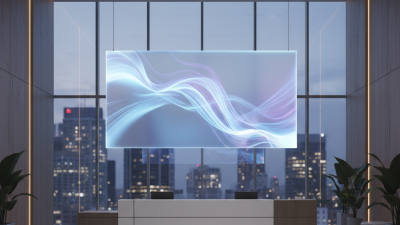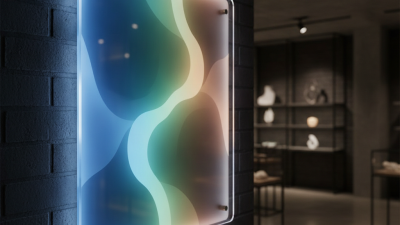
An Acrylic LED Board combines a clear or translucent acrylic face with internal LED illumination. It can function as a shop sign, reception display, directional panel, or branded wall feature. The acrylic surface spreads light across letters, logos, and printed graphics. When designed well, it looks bright without feeling harsh.
Signage specialist David Hickey once said, “A sign succeeds when its message is understood before its materials are noticed.” This principle fits every Acrylic Led Board project. The board may use edge-lit, back-lit, or engraved acrylic construction. Edge-lit models create crisp glowing lines. Back-lit versions produce broader illumination behind solid graphics. Engraved designs can reveal fine details, especially in dim interiors. Each type creates a different visual experience.
The material also affects performance. Cast acrylic usually offers cleaner optical clarity than cheaper alternatives. LED color temperature changes the mood, from warm retail comfort to cool technical precision. Poor spacing can create dark patches. Excessive brightness can weaken readability.
It is not simply a glowing panel.
Before choosing a style, consider viewing distance, mounting position, power access, maintenance, and indoor or outdoor exposure. A small reception sign needs different lighting than a roadside display. This distinction is often overlooked. Even an attractive board can fail when glare, heat, or weak contrast appears in daily use. A reliable Acrylic Led Board should balance appearance, durability, legibility, and practical installation needs.
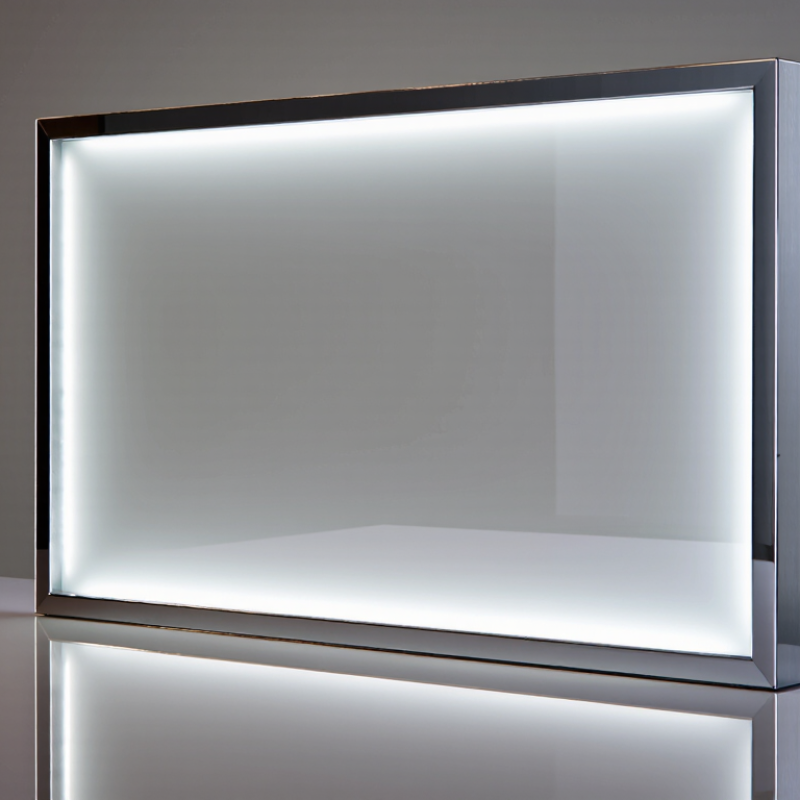
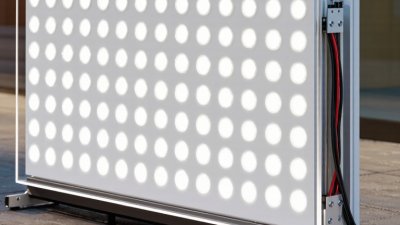
An acrylic LED board is a light-guiding panel made from polymethyl methacrylate, or PMMA. LEDs inject light through an edge, surface, or rear cavity. Micro-dots, etched lines, or printed patterns spread the light across the panel. The structure usually includes an acrylic sheet, LED modules, wiring, a reflective backing, and a protective frame.
For illuminated signs, 3–5 mm acrylic is a common working range. A 3 mm panel keeps weight and material use low. A 5 mm panel feels stiffer and resists bending across wider spans. ISO 7823-1 defines key requirements for PMMA sheets, but it does not make every LED board 3–5 mm. Thickness still depends on size, mounting, heat, and viewing distance. That detail is often missed.
The U.S. Department of Energy’s Solid-State Lighting research reports describe laboratory LED efficacy above 200 lumens per watt, while commercial systems usually perform below laboratory results. Optical losses still matter. A bright diode cannot correct poor diffusion or uneven spacing. The International Energy Agency has also reported that lighting represents roughly 15% of global electricity use, supporting the shift toward efficient solid-state illumination.
In practice, edge-lit panels suit slim displays, while backlit boards provide stronger depth and easier maintenance.
I would not call 3 mm automatically superior. Large panels may need a deeper frame, better thermal airflow, or a thicker sheet. One overlooked weakness is glare near viewing angles.
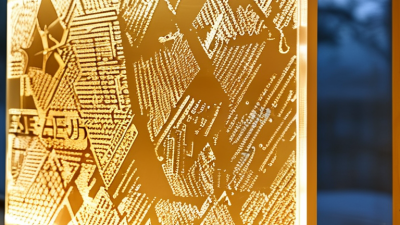
An acrylic LED board combines a clear acrylic panel with LEDs and a printed or engraved message. Its appearance depends less on the panel alone than on how light travels through it. Edge-lit models place LEDs along the panel’s sides. Light enters the acrylic, then spreads across its surface through etched dots, grooves, or a frosted pattern. This creates a slim sign with clean edges and low power demand. It works well for counter displays, room labels, and shallow wall signs.
Back-lit designs position LEDs behind the acrylic sheet. They usually produce stronger, more even illumination across broad graphics. A printed diffuser, spacer, or translucent film helps soften bright points. Without enough distance, however, individual LEDs may appear as visible hotspots. That detail is easy to miss during daytime installation. Back-lit boards need more depth, but they can make large lettering easier to read from several meters away. In a dim hallway, edge lighting may feel refined; in a bright retail area, back lighting often performs better.
Installation experience also changes the result. Dust, uneven mounting, and poorly matched power supplies can reduce clarity. A visually attractive prototype may look weaker after nightfall. Testing the board at its real viewing distance matters. Color temperature, acrylic thickness, and graphic density should be checked together. Neither design is universally superior. The better choice depends on brightness, available depth, viewing angle, and maintenance access.
An acrylic LED board uses a clear or frosted acrylic panel to spread light across a sign, display, or decorative surface. Its LEDs may be edge-lit or mounted behind the panel. Edge-lit designs create slim, even signs, while back-lit boards usually provide stronger brightness. The difference matters.
For many installations, 12 V and 24 V systems are the practical choices. A 12 V system suits shorter signs and compact displays. A 24 V system can reduce current over longer cable runs, helping limit voltage drop and uneven brightness. Always match the power supply to the board’s voltage, wattage, and outdoor protection requirements. Keep wiring accessible.
Many manufacturers rate quality LED modules for approximately 50,000 hours. That figure assumes suitable temperature control, stable voltage, and correct installation. It does not mean the board will look perfect for 50,000 hours. Acrylic can discolor, connections can loosen, and brightness may gradually decline. The 50,000-hour figure is useful, but it is not a promise.
In practice, measuring the cable length and total load before installation prevents common failures. A small mistake in power planning can create dark sections or overheated components. For large boards, separate power feeds may be necessary. Weather-exposed systems also need sealed connections and appropriate enclosures. When the electrical load is uncertain, a qualified professional should verify the design before energizing the sign.
An acrylic LED board is a clear or translucent acrylic panel shaped by edge-lit or backlit LEDs. It displays logos, notices, menus, and directional messages. Indoor boards usually use lower brightness, often 500–1,500 cd/m², because excessive output causes glare in corridors and shops. The International Energy Agency reported that LEDs represented about half of global lighting sales in 2022. That shift supports LED signage, but energy efficiency still depends on drivers, operating hours, and heat management.
Outdoor boards need stronger sealing and more careful installation. An IP65 rating protects against dust and water jets, while IP67 adds temporary immersion protection under IEC 60529 testing. IP ratings do not confirm impact resistance, sunlight stability, or resistance to condensation.
Outdoor brightness commonly ranges from 3,000 to 7,000 cd/m². Direct afternoon sunlight can still reduce readability. Acrylic may yellow, scratch, or develop hot spots when ventilation is poor. This detail is often overlooked.
Programmable types use single-color, RGB, or pixel-controlled LEDs. They can show changing prices, schedules, alerts, or animated graphics. Simple content suits retail windows; programmable control suits transport areas and event spaces. In practice, brightness sensors and timed dimming improve comfort and reduce power use. A technical review remains necessary. The wrong viewing distance, font size, or refresh rate can make a costly board difficult to read. Specification sheets should state brightness, viewing angle, color temperature, operating temperature, and tested IP conditions.
What Is an Acrylic LED Board and What Types Are Available?
An acrylic LED board uses light-emitting diodes behind or beside a transparent PMMA panel. It creates illuminated signs, menus, displays, and architectural panels. Common types include edge-lit boards, back-lit boards, and engraved light-guide panels. Edge-lit designs suit slim signs. Back-lit models provide stronger, more uniform brightness. The choice depends on viewing distance and mounting depth.
Manufacturing starts with acrylic selection. Cast acrylic usually offers clearer edges and better machining performance. Extruded acrylic can reduce cost, but stress marks may appear during cutting. Optical-grade PMMA improves light transmission and reduces cloudy areas. Surface texture also matters. Fine engraving can spread light across dark zones, although poor spacing creates bright dots. Measure luminance in candela per square metre, not by eye. The U.S. Department of Energy reports that LED lighting generally uses at least 75% less energy than incandescent lighting. However, actual board consumption depends on LED density, driver efficiency, operating hours, and heat management. Bigger is not always brighter.
Tips: Request a sample panel before production. Check luminance at the edges and centre. For outdoor use, confirm UV stability, moisture protection, and temperature ratings. Compare watts per square metre, not only total wattage. A smaller board may consume more if it uses dense LEDs. This is often overlooked. Also review the full-size drawing carefully; one incorrect mounting hole can waste an entire panel. Report references: U.S. Department of Energy, Energy Saver, “LED Lightbulbs”; ASTM International, acrylic sheet and plastics testing standards.