China Top 10 Indoor Business Sign Manufacturers
China’s indoor signage sector combines manufacturing scale with increasingly refined visual communication. This guide, “China Top 10 Indoor Business Sign Manufacturers,” examines companies producing Business Signs Indoor for offices, retail stores, hotels, hospitals, and public facilities.
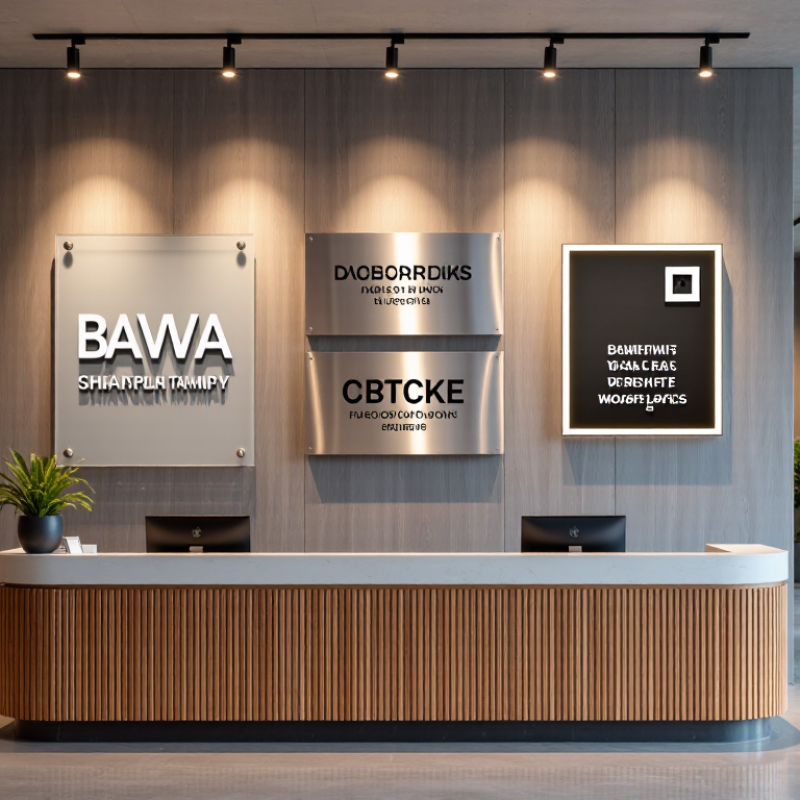
The selection considers material quality, production experience, design capability, customization, safety practices, and delivery reliability. It also looks beyond attractive product photos. A polished reception sign may use acrylic, brushed stainless steel, LED lighting, or dimensional lettering. Each material affects durability, maintenance, readability, and cost.
David Hickey, former president and CEO of the International Sign Association, has said, “A sign is not decoration; it is communication.” That principle matters inside busy commercial spaces. A directional sign should guide visitors within seconds. A reception logo should remain clear under warm ceiling lights. A wall sign should match the brand without overpowering the room.
This overview is designed for buyers, architects, contractors, and brand managers comparing Chinese suppliers. It highlights practical differences in engineering support, sample approval, packaging, quality inspection, and after-sales communication. Certifications and compliance documents should still be verified independently for each project.
No ranking is perfect.
Supplier strengths can vary by order size, region, and application. A manufacturer that excels at illuminated lobby letters may not be ideal for tactile accessibility signs or large retail programs. Buyers should request drawings, material samples, production photographs, and realistic lead times before placing an order. Small details often expose bigger weaknesses.
What Indoor Business Signs Are and Why They Matter
Indoor business signs are visual tools used inside offices, shops, hotels, clinics, and public venues. They include reception signs, room labels, directional panels, wall lettering, safety notices, and promotional displays. Their purpose is simple: help people understand where to go and what to do. Good signs reduce hesitation near entrances, elevators, counters, and corridors. They also make a space feel organized.
The Signage Impact Study (2012) reported that 76% of surveyed consumers had entered a business for the first time because of its sign. The same study found that 68% had purchased something after noticing a sign. These figures show that signage influences behavior, not just decoration. The Economic Value of On-Premise Signs (2019) also connects clear visibility with stronger customer access and business recognition. Yet signs are not magic. Poor contrast, small lettering, or confusing arrows can create frustration. I have seen attractive signs fail because visitors could not read them from a practical distance. Indoor business signs should match viewing height, lighting, traffic flow, and the customer’s likely stress level. Short messages usually work better. Visibility becomes measurable. Teams can test sign performance by tracking direction questions, missed rooms, and customer movement. That evidence may expose design choices that looked impressive but worked poorly.
How China’s Indoor Signage Industry Is Evaluated
China Top 10 Indoor Business Sign Manufacturers
China’s indoor signage industry is evaluated through more than attractive designs and competitive prices. A credible manufacturer should show consistent production records, clear material specifications, and practical quality controls. During supplier assessments, buyers often inspect acrylic edges, metal finishing, LED brightness, wiring, and mounting hardware. Small defects become obvious under office lighting.
Experience matters during sample testing. A reliable factory can explain how it handles color matching, logo accuracy, packaging, and installation instructions. It should also provide production drawings before manufacturing begins. Details matter. A polished showroom can mislead, so buyers should compare samples with finished orders and request photographs from real projects. Not always.
The strongest candidates among China’s top indoor business sign manufacturers usually maintain traceable inspection steps. These may include incoming material checks, illuminated testing, surface inspections, and final quantity verification. Professional communication is equally important. Clear answers about lead times, revisions, replacement parts, and after-sales support reveal operational maturity. Third-party inspections can add confidence, especially for large or repeated orders. However, a certificate alone does not prove dependable workmanship. That gap matters. Buyers should review current evidence, not rely only on old project images or broad claims. A careful evaluation also considers packaging strength, destination-market requirements, energy use, and the manufacturer’s ability to repeat the same finish across multiple batches. Mistakes still happen, even in capable factories. The real question is whether the supplier detects them early and responds with documented corrections.
Profiles of the Top 10 Chinese Indoor Sign Manufacturers
China Top 10 Indoor Business Sign Manufacturers
The top ten Chinese indoor sign manufacturers show distinct strengths rather than identical capabilities. One specializes in edge-lit acrylic panels. Another focuses on brushed aluminum reception letters. A third produces illuminated channel letters for retail interiors. The remaining profiles cover wood veneer, stainless steel, fabric lightboxes, digital displays, modular wayfinding, custom neon-style lighting, and small-batch signage. This range reflects growing demand for flexible indoor branding. MarketsandMarkets projected the global digital signage market to reach about USD 43.4 billion by 2028, with a 9.7% compound annual growth rate from 2023.
A practical profile should examine more than appearance. The strongest manufacturers provide material samples, color references, wiring diagrams, and installation drawings. Several Chinese factories support low-voltage LED systems, CNC cutting, laser engraving, and export packaging. Their quality controls may include brightness checks, adhesive testing, dimensional inspection, and a 24-hour lighting test. Those details matter in hotel lobbies, shopping centers, and office reception areas. Still, a polished sample can hide uneven light near corners. That weakness deserves attention.
The ten profiles also differ in production scale. Some handle high-volume retail rollouts, while others suit one-off architectural projects. Buyers should compare lead time, minimum order quantity, replacement parts, and after-sales response. Intertek and UL-related testing may support confidence, but certification must match the destination market and product design. Data from Grand View Research links signage growth with retail modernization and improved indoor customer experiences. Yet reports cannot replace a factory audit. A video tour is useful, but physical samples reveal more.
China’s Top 10 Indoor Business Sign Manufacturers
Product capability profile based on publicly listed indoor signage offerings. Categories may overlap because one manufacturer can provide multiple sign types.
The values represent the number of manufacturers, out of ten, publicly associated with each indoor sign category. Acrylic signs, LED channel letters, stainless-steel signs, and wayfinding systems are among the most common product capabilities.
Key Products, Materials, and Customization Options
China Top 10 Indoor Business Sign Manufacturers: Key Products, Materials, and Customization Options
China’s leading indoor sign manufacturers typically produce reception logos, directory boards, acrylic letters, wayfinding systems, and illuminated wall signs. A 2024 Grand View Research report valued the global digital signage market at about USD 27.1 billion in 2023, with continued growth through 2030. This trend supports demand for brighter, slimmer, and more adaptable indoor displays.
Material selection affects appearance, durability, and installation time.
Acrylic creates clean edges and even light diffusion. Stainless steel offers a precise, executive finish. Aluminum reduces weight for suspended signs, while wood veneer adds warmth to hospitality interiors. LED modules improve visibility and reduce energy use; the U.S. Department of Energy reports that LEDs use at least 75% less energy than incandescent lighting. That figure is useful, but real savings depend on operating hours and power design.
Customization may include logo cutting, raised lettering, color matching, edge polishing, laser engraving, digital printing, and concealed mounting.
Experienced buyers should request samples, light tests, drawings, and packaging photos before production. A polished sample can still hide weak adhesive or uneven illumination. The less obvious detail matters. Indoor humidity, cleaning chemicals, viewing distance, and wall texture should guide specifications. The Smithers report The Future of Printed Signage to 2028 also highlights digital production’s flexibility, although customization can increase costs and create longer approval cycles.
How to Compare Suppliers and Select the Right Manufacturer
Choosing among China’s top indoor business sign manufacturers requires more than comparing online catalogs. Begin with the sign’s purpose, viewing distance, wall surface, and expected operating hours. A professional supplier should explain material choices clearly, including acrylic thickness, aluminum grades, LED brightness, wiring access, and color consistency.
Request recent project photos, physical samples, production videos, and written quality standards. Ask whether the sample uses the same materials as the final order. It is a small detail, but it often exposes weak quality control. Verify production capacity, inspection procedures, packaging methods, and experience with international shipping. Factory size alone proves little.
Price comparisons should include tooling, artwork preparation, replacement parts, packaging, freight, and possible installation support. A low quotation may exclude essential work. Request a detailed, itemized offer with realistic lead times. Confirm how the supplier handles scratches, uneven lighting, incorrect dimensions, or damaged cartons. Get these terms in writing.
Material safety and electrical documentation also deserve attention. The manufacturer should provide relevant test records and help meet the destination market’s electrical and building requirements. Ask who checks the wiring before dispatch. Do not rely on vague promises.
Communication is another practical test. Send the same specification to several suppliers and compare their questions, not only their prices. Strong manufacturers notice missing dimensions or unclear artwork. Poor replies can create expensive revisions later. My own comparison would include a small trial order, although this adds time. That inconvenience is often cheaper than correcting a large, poorly made sign.



 Inquiry
 Email
 WhatsApp