






The Frustration of Toppled Outdoor Sidewalk Signs
Every business owner knows the dread of a windy autumn afternoon or a sudden summer storm. You look out the storefront window only to see your expensive advertising board face-down on the concrete, scratched, bent, or worse—blocking pedestrian traffic and posing a liability risk. Standard plastic signs or lightweight boards simply lack the physical design to withstand unpredictable urban wind tunnels.
When an advertising board falls, it does more than just look unprofessional. It damages your brand image, ruins costly graphics, and can cause injury to passersby. To solve this common pain point, modern sign engineering has moved toward high-performance materials and physics-driven design. By utilizing a heavy-duty metal sandwich board sign, businesses can ensure continuous visibility and safety, regardless of the weather conditions.
🌪️ Why Standard Signs Fail
Most common street signs fail due to three primary engineering oversights:
- Inadequate Base Weight: Lightweight plastic or thin aluminum frames act as sails, catching the wind and tipping instantly.
- Uncontrolled A-Frame Spread: Without a rigid limiting mechanism, wind forces can cause the legs to over-extend or collapse inward.
- Static Drag Profile: A completely rigid, non-aerodynamic angle creates high drag coefficients, maximizing the wind's pushing power.
The Anatomy of a Truly Wind-Resistant A-Frame Sign
Keeping a sign standing in wind gusts exceeding 30 mph requires a combination of structural mechanics, material science, and geometric optimization. Here is how advanced metal sandwich boards conquer the wind.
1. Self-Weight Structural Design
The foundation of stability is mass. A premium heavy-duty metal sandwich board sign utilizes dense, galvanized steel or powder-coated iron frames. By concentrating the weight in the frame rather than the graphic panels, the sign lowers its Center of Gravity (CoG). A lower CoG means the tipping point is significantly harder to reach, requiring exponentially higher wind speeds to break the sign's vertical equilibrium.
2. Bottom-Weighted Limiting Chains
The limiting chain does more than just stop the A-frame from opening too far. Positioned at the bottom third of the frame, a heavy-duty steel limiting chain acts as a tension stabilizer. When wind pushes against one face of the sign, the chain transfers the load across to the opposite leg, distributing the force evenly. Furthermore, hanging additional ballast (like sandbags or water weights) directly from this central chain keeps the downward force concentrated exactly where it is needed most.
3. Self-Adaptive Wind-Resistant Angles
The angle at which the A-frame stands determines its aerodynamic footprint. An optimal angle of 65° to 75° allows wind to flow up and over the sign face, creating a downforce effect rather than a pure drag force. Some advanced signs feature spring-loaded bases or semi-flexible hinges that self-adjust under high wind loads, narrowing the profile temporarily to let extreme gusts pass harmlessly around the structure.
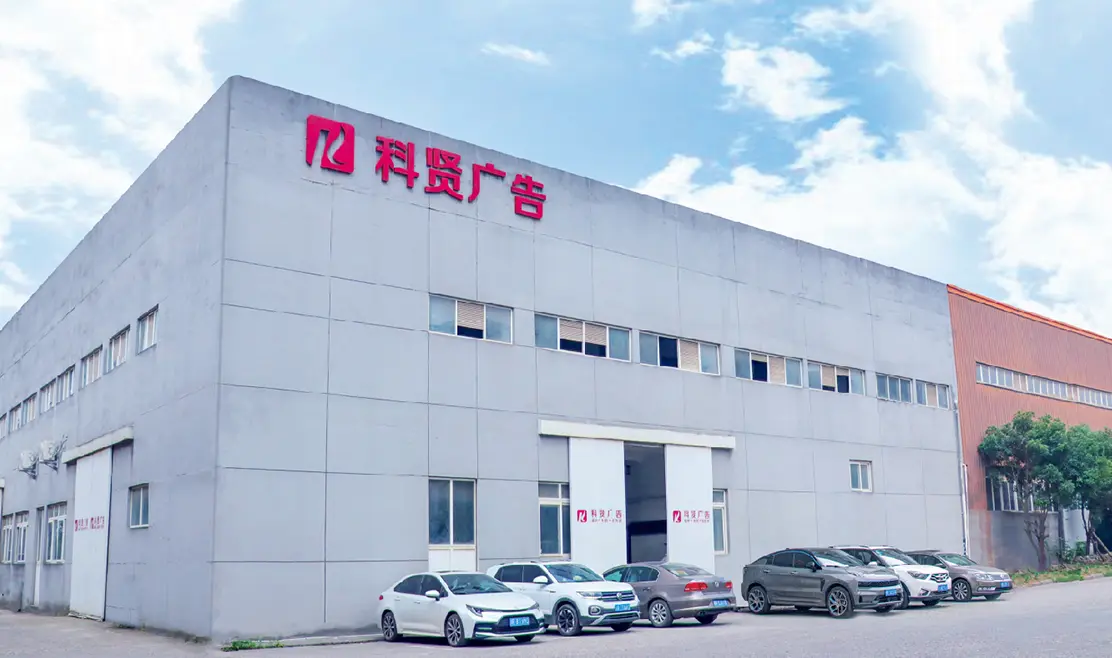
Sichuan Kexian Advertising Limited Company
Kexian is a professional signage manufacturer with over 20 years of experience. Our product range extends from small custom door plates to a variety of large landscape logos and heavy-duty commercial outdoor signs. Our products are CE, RoHs, and UL certified, guaranteeing the highest international standards of safety, durability, and environmental compliance. We warmly welcome OEM and ODM orders with low MOQ requirements and exceptionally short lead times. Cooperating closely with trusted global carriers like DHL, UPS, and Fedex, we ensure all items are shipped securely and arrive on time.
- One-stop service
- High quality products
- Advanced production equipment
- OEM & ODM services
Our Services
Whether you are an advertising agency, a corporate brand, or a local shop owner looking for a rugged storefront sign, Kexian is your trusted manufacturing partner. No matter which industry you represent—architecture, education, beauty, hospitality, retail, or supermarkets—you can find the perfect wind-resistant display solution right here.

-

OEM/ODM signage
-

Free 3D effect design
-

Factory price
-

Fast shipment
-

Online installation guide
-

3 years warranty
-

LOW MOQ
How to customize?
From initial concept to your doorstep, we make the customization of your wind-resistant signs seamless and efficient.
-

1. Send an inquiry
We would be glad to know where the sign will be installed and what size you need. Basic information helps us make a quick quotation.
-

2. Design
Share your signs ideas with us and you can get a free 3D rendering.
-

3. Production
After your confirmation and approval, we will start the production. Our factory has experienced workers and multiple different equipment with a short lead time.
-

4. Inspection
All products are given at least 24-hour light test before shipping and quality checked by professional inspectors.
-

5. Transportation
Cooperated with DHL, UPS, FedEx and other branded shipping companies, all items can be shipped on time and safely. We export to Europe, USA, Canada, Asia, the Middle East and Africa.
-

6. After Sales
We provide installation documentation, videos and online services to help you with your installation. A three-year warranty is provided.
Why Heavy-Duty Metal is Essential for Outdoor Sidewalk Signs
When selecting the best signage material, the debate often lands between high-density plastics and heavy-duty metals. While plastics are cheap and easy to carry, they lack the physical mass required to resist high wind pressure. A wind-resistant A-frame sign constructed from high-grade iron or structural steel offers several critical structural advantages:
🛡️ Corrosion Resistance & Durability
Outdoor signs are subjected to rain, UV rays, snow, and road salt. Industrial metal frames are hot-dip galvanized or treated with electrostatic powder coatings. This prevents rust formation and structural degradation over years of outdoor exposure, ensuring the hinges and locking chains remain structurally sound.
🔧 Rigid Mechanical Joints
Unlike plastic hinges that warp, crack, or shear under high wind shear, heavy-duty metal hinges maintain a tight pivot point. This prevents the two faces of the sandwich board from twisting or vibrating violently in gusty winds, which is a primary cause of structural failure.
💡 Pro Tip: Adding Ballast Correctly
If you are expecting severe storm gusts, do not place weights on top of your A-frame sign. This raises the center of gravity and makes it tip even faster. Instead:
- Hang sandbags or heavy rubber weights from the bottom limiting chain.
- Place flat sandbags directly over the bottom feet of the metal frame.
- Position the sign parallel to the wind direction to reduce the surface area exposed to direct wind force.
Choosing the Right Sign for Your Wind Environment
Compare the structural integrity and performance parameters of standard sidewalk signs against advanced wind-resistant alternatives.
| Feature / Parameter | Standard Plastic A-Frame | Standard Metal Sign | Heavy-Duty Wind-Resistant Sign |
|---|---|---|---|
| Average Weight | 5 - 8 lbs (Very Light) | 12 - 18 lbs (Moderate) | 25 - 45 lbs (Heavy-Duty) |
| Wind Rating Limit | Up to 12 mph | Up to 22 mph | Up to 45+ mph (With Ballast) |
| Limiting Mechanism | Plastic strap or none | Thin side latches | Bottom-weighted steel limiting chain |
| Center of Gravity | High / Unstable | Medium | Ultra-Low (Engineered base weight) |
| Aerodynamic Flexibility | Rigid (Acts like a sail) | Rigid | Self-adaptive hinge angles |
| Lifespan & Warranty | 6 months - 1 year | 1 - 2 years | 3+ Years (Kexian Warranty) |
Frequently Asked Questions
Here are the most common inquiries regarding the setup, customization, and wind-proofing of outdoor sidewalk signs.
❓ What is the best angle to set up my A-frame sign for maximum wind resistance?
The optimal setup angle is between 65° and 75°. Setting it too wide increases the surface area exposed to vertical wind lift, while setting it too narrow makes the sign tipsy. A bottom limiting chain ensures the sign stays locked at this optimal angle.
❓ Can I use standard poster boards in heavy-duty metal sandwich board signs?
Yes, but for high-wind areas, we recommend using corrugated plastic (Coroplast) or aluminum composite panels (ACM) as inserts. Paper or thin cardboard inserts can warp, tear, or fly out of the frame when subjected to strong wind drafts.
❓ How does Sichuan Kexian guarantee the wind durability of its custom signs?
All our heavy-duty signs undergo structural load simulation and physical stress tests. We use thick-gauge steel, reinforced locking hardware, and rust-resistant finishes to ensure the signs withstand years of harsh outdoor weather.
❓ Are heavier signs difficult to move inside at the end of the business day?
Our heavy-duty signs are designed with flat-folding mechanisms and integrated carry handles. This allows you to fold the sign flat and carry it easily, balancing high wind-resistance with daily operational convenience.