Top Tips for Choosing Lighted Business Signs for Your Brand?
Choosing the right lighted business signs is crucial for brand visibility. According to industry expert John Smith, "A well-designed lighted sign not only attracts attention but also conveys your brand message effectively." In today's highly competitive market, your signs must stand out. Lighted business signs act as beacons, guiding customers toward your establishment, especially in the evening when natural light fades.
Many businesses overlook the importance of signage. However, the right lighted sign can make a striking first impression. It can reflect your brand's personality and values. When selecting lighted business signs, you must consider factors like design, color, and placement. These elements can enhance brand recognition and drive foot traffic. A poorly chosen sign may distract rather than attract.
Evaluating your options is vital. Take time to reflect on your brand identity and customer expectations. Exploring different materials and lighting options can lead to better decisions. Remember, the goal is not just to illuminate your store but to illuminate your brand story. Well-crafted lighted business signs can create an inviting atmosphere that draws in customers.
Factors Influencing Visibility and Effectiveness of Lighted Signs
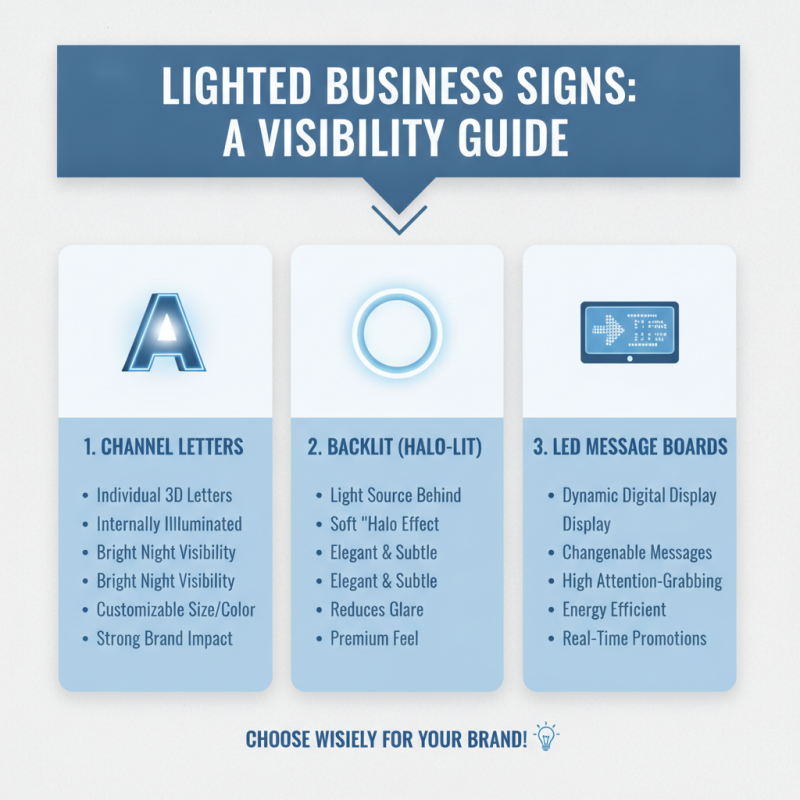
When choosing lighted business signs, visibility is key. A study by the International Sign Association found that 76% of consumers enter a store they have never visited, drawn in by signs. Proper lighting can significantly enhance visibility, especially at night. Backlit signs and illuminated channel letters perform well in attracting attention.
Color contrast matters too. Bright colors can make a sign stand out against a dull background. Utilizing LED technology is beneficial as well. LEDs consume less energy and typically have a longer lifespan. According to the Department of Energy, LED signs use 75% less energy than traditional signs.
Consider the sign's location and orientation. A sign placed at eye level is often more effective. Observations show that consumers are attracted to signs that they can easily glance at without stopping. Regular maintenance is necessary to keep the sign in optimal condition. A flickering or dim sign can negatively impact brand perception. Attention to detail is crucial in ensuring your lighted sign effectively communicates your brand message.
Top Tips for Choosing Lighted Business Signs for Your Brand
Understanding Different Types of Lighted Business Signs and Their Uses
Choosing the right lighted business sign is crucial for your brand's visibility. Various types exist, each serving unique purposes. Channel letters, for example, consist of individual 3D letters illuminated from within. This style is popular due to its vibrant impact, especially at night. They can be customized in size and color, which provides flexibility for branding.
Another option is illuminated box signs. These signs are typically rectangular and provide excellent visibility. They often house graphics and text that capture attention quickly. Businesses can use these for promotions or directional purposes. However, placement is vital; a poorly positioned box sign can be easily overlooked.
Finally, neon signs have a classic appeal. While they may feel retro, they also provide a warm, inviting glow. Many still appreciate their charm. Yet, businesses must consider maintenance. Neon can break or fade over time, requiring attention. Choosing the right type depends on your brand’s identity, target audience, and location. Balancing aesthetics with practicality is key.
Evaluating the Cost-Effectiveness of Lighted Signs for Brand Promotion
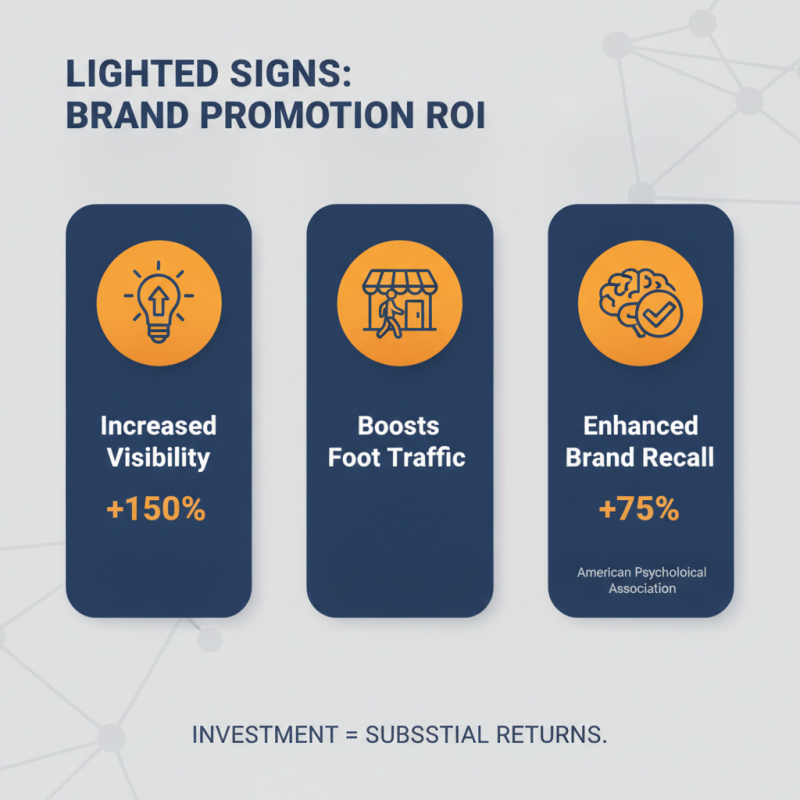
Evaluating the cost-effectiveness of lighted signs for brand promotion is crucial. Studies show that illuminated signs can increase visibility by over 150%. This heightened visibility translates directly into foot traffic. A well-placed lighted sign can attract customers who may not have otherwise entered your store. The American Psychological Association indicates that bright signage enhances brand recall by up to 75%. Investing in quality lighted signs can yield substantial returns.
When choosing a lighted sign, consider these tips: Ensure the design aligns with your brand identity. A cohesive look fosters trust and recognition. Evaluate your local regulations on signage; compliance is essential to avoid fines. Look for energy-efficient options, as they reduce long-term costs.
Additionally, measure the impact over time. Regular assessments can reveal if the signage is driving desired outcomes. It’s vital to adapt as customer preferences change. Lighted signs, while initially costly, could see a return on investment within six to twelve months. This timeline depends on location and market factors. Education on cost-effectiveness helps businesses make informed choices.
Assessing Local Regulations and Permitting for Lighted Business Signs
When considering lighted business signs, understanding local regulations is crucial. Each area has its own rules governing sign placement, size, and luminosity. A study by the International Sign Association highlights that almost 60% of businesses face challenges due to zoning regulations. This can delay sign installation and add extra costs.
Permitting is another important factor. Many municipalities require specific permits for lighted signs. This often involves submitting plans for review and waiting for approvals. According to a report from the Small Business Administration, about 23% of small businesses encounter permitting issues that can take weeks to resolve. Not accounting for these factors can lead to frustration and unexpected expenses.
Local ordinances can dictate more than just design. They can specify operational hours for lighted signs. For example, some cities may limit illumination to specific times, affecting visibility during peak business hours. Therefore, researching local laws and engaging with local authorities is an essential step for brands intending to install lighted signs. Ensuring compliance might seem tedious, but it can protect your investment in the long run.
Best Practices for Design and Placement of Lighted Signs to Attract Customers
Lighted business signs can significantly impact your brand's visibility. The right design and placement can attract more customers. According to a report from the Radiant Insights Research, illuminated signs can increase foot traffic by up to 50%. This statistic highlights the importance of making informed choices.
When designing your lighted sign, consider your brand’s identity. Use fonts and colors that reflect your message. Research shows that consistent branding can increase revenue by 23%. A clear and bold font can enhance readability from a distance. Avoid clutter in your design. A simple design often works better.
Placement is equally crucial. Position your sign where it captures attention. Studies indicate that signs placed at eye level yield a higher engagement rate. Consider the surrounding environment. Is your sign competing with others? Too many signs can dilute your impact. Reflect on your location’s visibility, especially at night. A well-placed, well-lit sign can draw in late-night customers effectively.
Top Tips for Choosing Lighted Business Signs for Your Brand
| Tip |
Description |
Best Placement |
Design Elements |
| Choose Eye-Catching Colors |
Select colors that stand out and align with your brand’s identity. |
Main entrance, high-traffic areas |
Contrasting colors, LED lighting |
| Simplify the Message |
Keep the wording concise to ensure quick readability. |
Near sidewalks, driveways |
Bold fonts, minimal text |
| Consider Size and Scale |
Choose an appropriate size that’s visible from a distance. |
Far viewing angles, multi-story buildings |
Large scale images, proper proportioning |
| Utilize Illumination Wisely |
Choose illuminated signs for visibility during nighttime. |
Entrances, off main roads |
LEDs, backlit designs |
| Follow Local Regulations |
Ensure compliance with zoning laws and signage regulations. |
Specific zones, public places |
Permitted sizes and materials |



 Inquiry
 Email
Email WhatsApp