What is a Large Building Sign and How Does it Impact Visibility?
Large Building Signs play a crucial role in urban landscapes. They capture attention and convey messages effectively. Businesses often rely on these signs for visibility and brand recognition. A well-designed sign can attract foot traffic and enhance a company's presence.
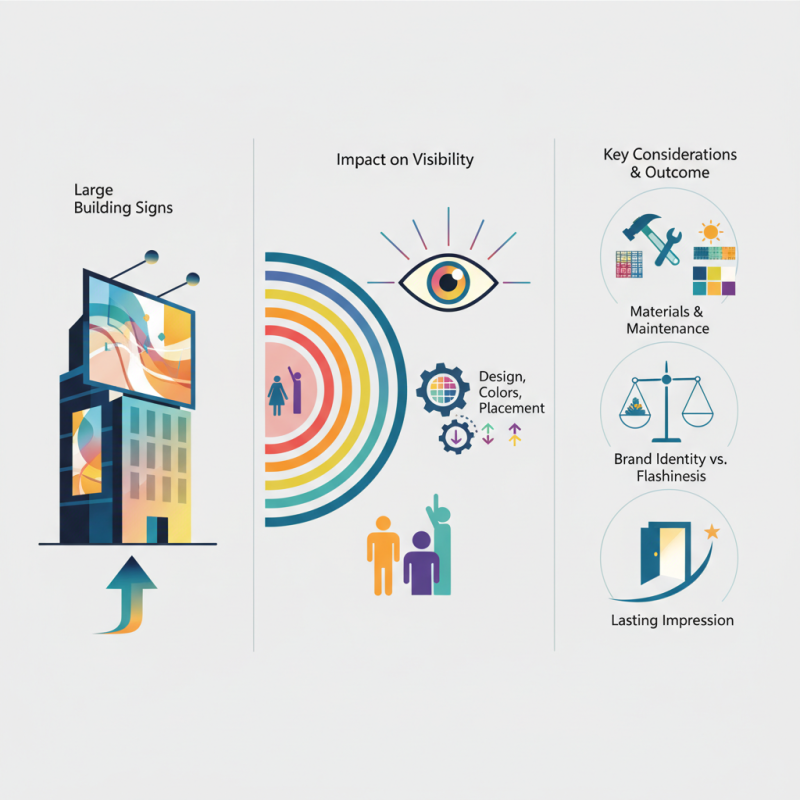
Visibility is not solely about size. The design, colors, and placement matter too. A striking Large Building Sign can stand out in a crowded environment. It should reflect the brand’s identity and values. However, the impact may vary. A sign that is too flashy can distract or confuse potential customers.
Consider the materials used for Large Building Signs. Some materials may fade over time, losing their visual appeal. Regular maintenance is essential to keep signs looking fresh. Thoughtful reflection on these aspects can improve sign effectiveness. Ultimately, a successful sign creates a lasting impression, inviting people in.
Definition and Characteristics of Large Building Signs
Large building signs play a crucial role in urban environments. They serve as primary visual identifiers for businesses and organizations. A report from the Sign Research Foundation highlights that 76% of customers enter a store they have never visited before, largely influenced by its signage. This emphasizes the importance of a well-placed and designed large building sign.
Characteristics of these signs include size, visibility, and design. Typically, they are over 100 square feet. Their scale ensures that they catch the eye, even from a distance. A well-designed sign can enhance branding and recognition. However, clarity is key. A complicated design may confuse rather than attract potential customers. An ideal sign communicates effectively, using simple graphics and legible fonts.
The impact of large building signs extends beyond mere aesthetics. They can influence foot traffic, contributing to revenue growth. According to the National Association of Realtors, signage can account for up to 12% of sales for businesses. Yet, signs must be maintained properly. Weather damage or fading can diminish their effectiveness dramatically. Business owners often overlook regular maintenance, which can lead to a negative impression.
Types of Large Building Signs and Their Uses
Large building signs come in various types, each serving a specific purpose. Lighted signs are popular for their visibility at night. They can illuminate a brand’s name, catching the eye of passersby. These signs often use LED technology, making them energy-efficient and bright. Additionally, they can be programmed to change messages easily, providing versatility for businesses.
Dimensional signs offer a different approach. Made of solid materials, they stand out against building surfaces. Their three-dimensional nature gives depth and presence. Often used by offices and retail shops, these signs grab attention without flashing lights. They require thoughtful placement to enhance visibility. Colors and fonts chosen must align with the brand image.
Banners are another option, usually made of fabric or vinyl. They are cost-effective and easy to install. However, they may not always endure harsh weather conditions. Many businesses use them for short-term promotions. Yet, they may lack the durability that permanent signs provide. Ultimately, choosing the right type of sign can significantly affect visibility, but it requires careful consideration and planning.
What is a Large Building Sign and How Does it Impact Visibility? - Types of Large Building Signs and Their Uses
| Sign Type |
Description |
Visibility Impact |
Common Uses |
| Monument Signs |
Freestanding signs typically made from stone, brick, or concrete. |
High visibility from distance, especially for locations off busy roads. |
Shopping centers, corporate offices, real estate developments. |
| Wall Signs |
Signs installed directly onto the building surface, can be illuminated. |
Excellent visibility, especially at night with illumination. |
Retail stores, restaurants, office buildings. |
| Pylon Signs |
Tall signs that stand above other structures, often seen from a distance. |
Very high visibility, ideal for drawing attention from busy roads. |
Gas stations, shopping plazas, business complexes. |
| Digital Signs |
Electronic displays that can show videos or changing messages. |
Highly effective for capturing attention with dynamic content. |
Entertainment venues, schools, promotional events. |
| Projecting Signs |
Signs that extend from a building face, visible from the side. |
Good visibility for pedestrians and drivers coming from different angles. |
Restaurants, theaters, retail stores. |
Factors Influencing Visibility of Large Building Signs
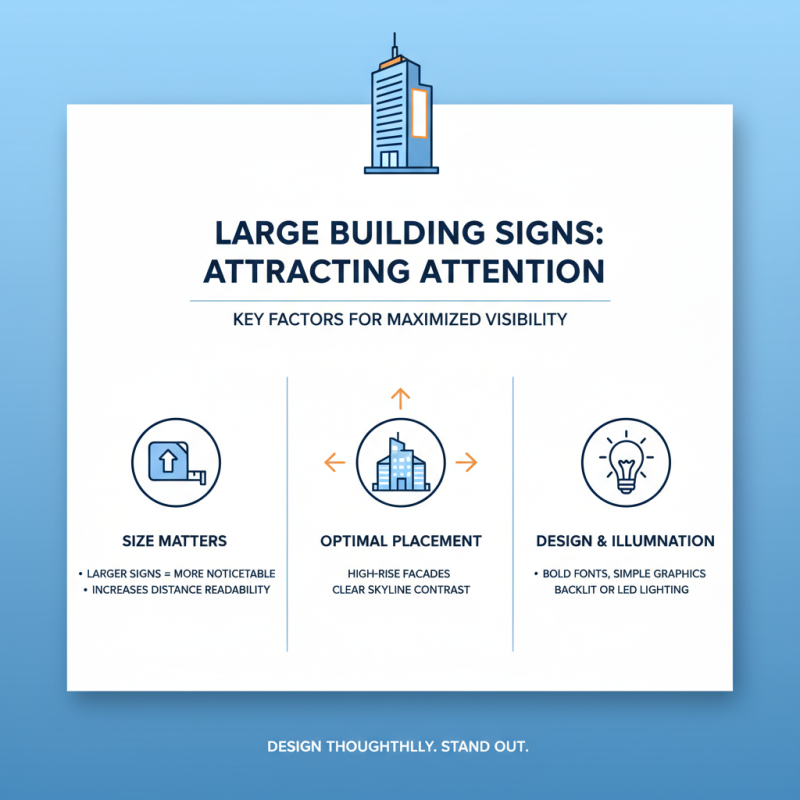
Large building signs play a significant role in how businesses attract attention. They need to be designed thoughtfully to maximize visibility. Several factors can influence how well a sign is seen from a distance. The size of the sign matters greatly. A larger sign is more likely to catch the eye of passersby. Placement also plays a critical role. A well-placed sign can stand out against the skyline.
Color contrasts can make or break visibility. Bright colors against dull backgrounds are easier to spot. Font style is equally important. Clear, bold letters ensure that messages can be read quickly, even from afar. One must consider lighting as well. Signs that are well-lit at night have a better chance of being seen.
However, not all designs succeed. Sometimes, complex graphics overwhelm viewers. Additionally, poor location choices may minimize visibility. Reflecting on these details is crucial for effective communication. A sign can enhance brand presence dramatically, but careful planning is essential.
Impact of Large Building Signs on Brand Recognition
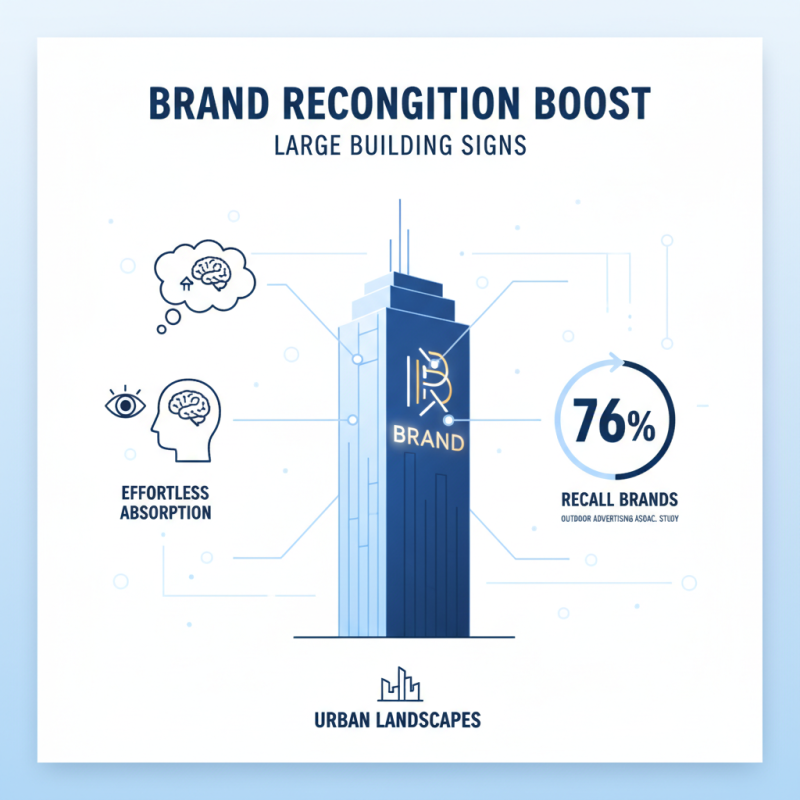
Large building signs play a significant role in enhancing brand recognition. A study by the Outdoor Advertising Association indicates that about 76% of individuals can recall the branding from a large sign they encounter. This statistic highlights the effectiveness of visual messaging in crowded urban landscapes. When people pass by these signs, they absorb information almost effortlessly.
Visibility is crucial in today’s market. Dimly lit or poorly designed signs can hinder brand recall. A report from the Sign Research Foundation shows that quality signage can lead to a 50% increase in customer visits. Yet, not all signs deliver this impact. Factors like design quality and location matter significantly. If a sign blends into its surroundings, it may go unnoticed.
Moreover, companies sometimes neglect maintenance. Faded colors or missing letters can detract from a brand’s image. A well-kept sign can convey professionalism, while a neglected one can suggest a lack of care. Brands should consider the implications of their signage investment. The choice of design and upkeep reflects the company's values and commitment to quality. It’s a reminder that visibility is not just about size; it’s about impact.
Regulatory Considerations for Large Building Signage
Large building signage plays a crucial role in urban landscapes.
These signs not only enhance visibility but also communicate important information.
Yet, their installation often comes with numerous regulatory considerations.
For example, many cities have specific height and size restrictions
to maintain aesthetic standards. In fact, a report from the International Sign Association indicates that
35% of local jurisdictions have strict guidelines governing sign dimensions.
Permits are often required before installation. The application process can vary significantly.
Some regions may need extensive documentation, while others are more lenient.
A misstep here can lead to delays or fines. In a 2021 industry survey,
45% of businesses reported challenges with navigating local sign regulations.
This shows a clear need for clearer communication
between businesses and regulatory bodies.
Moreover, it’s not just about compliance; the design of these signs must often align with zoning laws and community standards.
This can result in lengthy revisions.
Sometimes, designs that seem perfect initially face pushback from local councils or neighborhoods.
Thus, engaging with community members early may help.
Understanding these regulatory nuances is essential for businesses looking to utilize large building signage effectively.



 Inquiry
 Email
Email WhatsApp