How to Choose the Best Illuminated Building Signs for Your Business
When it comes to making a lasting impression on customers, the exterior of your business plays a crucial role. One of the most effective ways to enhance visibility and attract attention is through the use of illuminated building signs. These signs not only serve as an essential branding tool but also help potential customers find your location, especially during the evening hours. Choosing the best illuminated building signs for your business requires careful consideration of various factors, including design, materials, and local regulations.
The right illuminated building signs can significantly impact foot traffic and overall brand perception. A well-designed sign can communicate your business's identity and values while ensuring that customers can easily locate you. In this article, we will explore the key elements to consider when selecting illuminated building signs, including the importance of visibility and legibility, the types of illumination available, and how to effectively integrate your signage with your overall branding strategy. By understanding these factors, you can make an informed decision that will enhance your business's exterior appeal and functionality.
Understanding the Importance of Illuminated Building Signs for Businesses
Illuminated building signs play a crucial role in establishing a strong visual identity for businesses. They not only help in branding but also enhance visibility, making your establishment noticeable during both day and night. This combination of functionality and aesthetics is especially important in crowded commercial areas where competition for attention is fierce. A well-designed illuminated sign can draw in potential customers and convey a sense of professionalism and reliability.
When choosing illuminated signs, consider factors such as placement, design, and light quality. For instance, ensuring that your sign is strategically located can maximize visibility from various angles. Moreover, the design should reflect your brand's image while being legible and attractive. Lighting options should be bright enough to stand out but not so overpowering that they detract from the overall appearance.
**Tips**: Opt for LED lighting for energy efficiency and longevity. Additionally, test your sign’s visibility at different times of day to ensure it meets your needs. Finally, don’t forget to consider maintenance; selecting durable materials can save time and costs in the long run.
How to Choose the Best Illuminated Building Signs for Your Business
| Feature |
Importance |
Considerations |
Examples |
| Visibility |
Helps attract attention from a distance |
Height, color contrast, light intensity |
LED signs, neon lights |
| Branding |
Enhances brand recognition |
Design coherence with brand identity |
Custom logos, color schemes |
| Durability |
Ensures long-term investment |
Material quality, weather resistance |
Metal signs, acrylic boards |
| Energy Efficiency |
Reduces operational costs |
LED technology vs. traditional lighting |
Solar-powered options |
| Regulatory Compliance |
Avoids legal issues |
Local signage regulations, permits |
Zoning laws, sign size restrictions |
Factors to Consider When Selecting Illuminated Signage
When selecting illuminated signage for your business, several key factors should be taken into account to ensure you choose the best option for your needs. First, consider the visibility of the sign. The primary purpose of illuminated signage is to attract attention, so it's crucial to evaluate its brightness, color contrast, and height placement. Signs that are too dim or poorly positioned may not effectively catch the eye of potential customers, especially during nighttime or in low-light conditions.
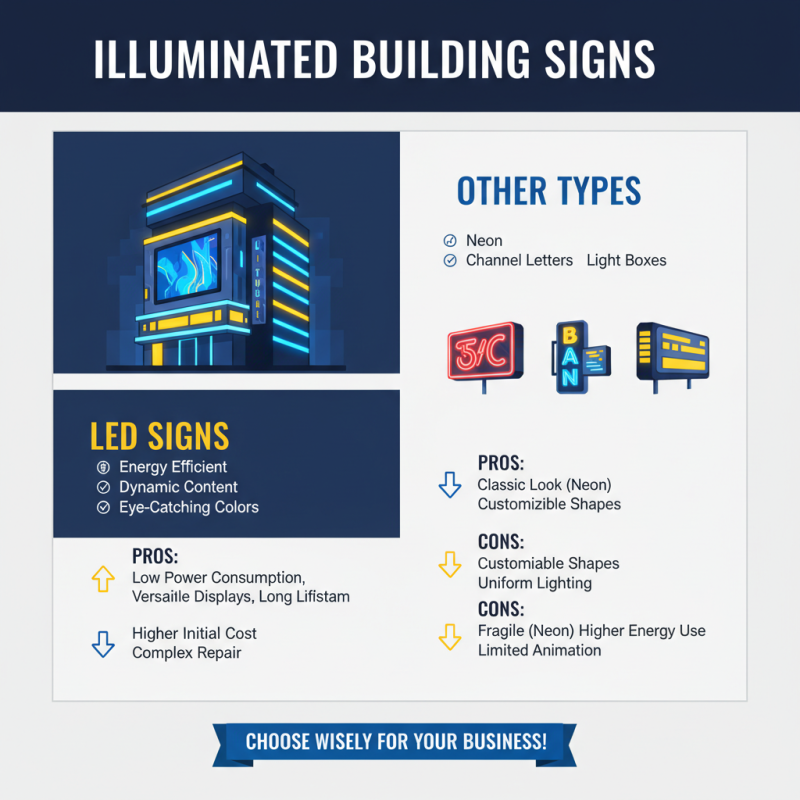
Another important factor is the type of illumination used. Different technologies, such as LED or neon, offer various advantages in terms of energy efficiency, longevity, and aesthetic appeal. LED signs tend to consume less power and have a longer lifespan, making them a practical choice for many businesses. Additionally, consider the sign's design and how it aligns with your brand identity. A well-designed illuminated sign should reflect your business's values and create a cohesive look that resonates with your target audience, thereby enhancing brand recognition and customer engagement.
Types of Illuminated Signs: Pros and Cons
When choosing illuminated building signs for your business, it's essential to understand the various types available, each with its own set of pros and cons. One popular option is LED signs, which are known for their energy efficiency and vibrant colors. LED signs are versatile, allowing for dynamic messages and animations that can capture the attention of passersby. However, they may require a higher initial investment compared to traditional signs.
Another common type is neon signs, which provide a classic, eye-catching glow that can enhance the aesthetic appeal of your business. Neon signs are distinctive and can be customized in numerous shapes and colors, making them memorable. On the downside, they can be less energy-efficient and more fragile than other options, potentially leading to higher maintenance costs over time.
Lastly, backlit signs offer a modern and sleek look, illuminating the sign from behind for a sophisticated effect. They create a standout appearance, especially at night, making your business more visible. However, backlit signs may also come with higher production costs and installation complexity. Understanding these pros and cons will help you make an informed choice that aligns with your business needs and budget.
Design Elements for Effective Illuminated Signs
When designing illuminated building signs, several key elements can significantly enhance their effectiveness. First, the choice of colors plays a critical role. Bright colors such as white, yellow, and red tend to attract more attention, especially in low-light conditions. Additionally, it's important to consider contrast; for instance, a light text on a dark background can improve readability. The right color combination not only helps in brand recognition but also ensures that the sign stands out among the competition.
Another essential design element is the font style. A clear, bold typeface will ensure that your message is legible from a distance. Sans-serif fonts are often preferred for illuminated signs due to their clean lines and modern appearance. Size also matters; larger text will be more visible and can be read quickly, which is crucial for passerby engagement. Furthermore, incorporating your logo into the sign's design can enhance brand consistency and make your business more memorable while integrating well with the overall aesthetic of the building.
Types of Illuminated Signage and Their Effectiveness
Regulatory Considerations for Illuminated Building Signs
When selecting illuminated building signs for your business, understanding regulatory considerations is paramount. Local zoning regulations often dictate the type, size, and brightness of signs that can be displayed. For instance, a survey conducted by the Sign Research Foundation revealed that approximately 70% of municipalities have specific codes regarding illuminated signage, with restrictions varying widely between urban and rural areas. This is critical to consider, as non-compliance could lead to fines or the need for costly redesigns after installation.
Moreover, businesses must also be mindful of light pollution regulations aimed at minimizing excessive brightness that can disrupt nearby residential areas or natural habitats. The International Dark-Sky Association suggests that overly bright signage can contribute to skyglow, which can negatively affect wildlife and human health. By adhering to these regulations and selecting an illuminated sign that complements local ordinances, businesses can ensure their signage not only enhances visibility but also aligns with community standards and environmental considerations, ultimately leading to a more sustainable and responsible advertising strategy.



 Inquiry
 Email
Email WhatsApp