How to Choose the Best Business Wall Sign for Your Needs?
Choosing the right Business Wall Sign is crucial for any establishment. It not only conveys your brand identity but also guides and informs customers. According to signage expert, John Marshall, “A well-chosen sign creates an immediate impact and sets the tone for customer experience.”
Selecting an appropriate Business Wall Sign involves various considerations. Think about size, material, and visibility. The sign must reflect your brand image effectively. A poorly chosen sign can confuse customers or fail to attract attention. It’s essential to balance aesthetics with functionality.
In today's competitive landscape, your Business Wall Sign should stand out. However, striking the right balance can be challenging. Consider the location and surrounding elements. Sometimes, what seems like a perfect choice may not resonate with your audience. Reflecting on feedback can aid in refining your selection process. You want a sign that represents your business and enhances its atmosphere.

Understanding the Importance of Business Wall Signs
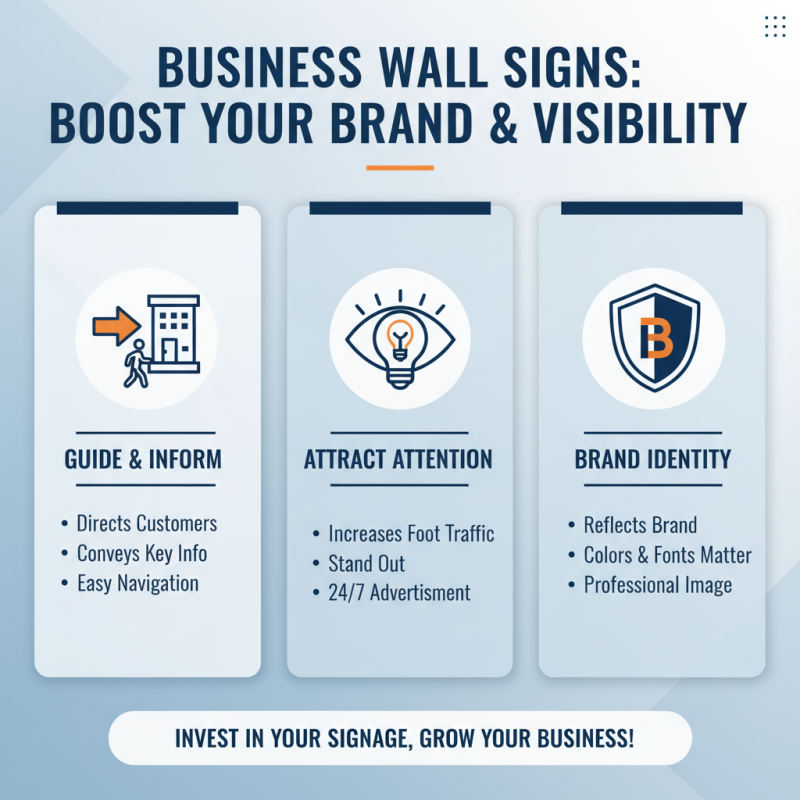
Business wall signs play a crucial role in branding and visibility. They guide customers and convey important information. A well-placed sign can attract attention and invite foot traffic. The design of these signs should reflect your brand's identity. Colors and fonts matter. Bright colors can grab attention, while subtle tones can convey professionalism.
Consider the practicality of your sign. It should be readable from a distance. If it’s too small, it will go unnoticed. Placement is key. Signs near entrances are highly effective. Think about the materials too. A durable sign withstands weather elements better and lasts longer. Yet, you might find that over time, your sign may fade or require updates. Regular reflection on its effectiveness is necessary.
Take feedback seriously. If customers struggle to identify your location, it’s time to reassess. Even the best designs need improvement. Sometimes, a simple change can enhance clarity. A business wall sign is more than decoration; it’s a silent ambassador for your brand. Ensure it serves its purpose well.
Identifying Your Business's Unique Needs and Goals
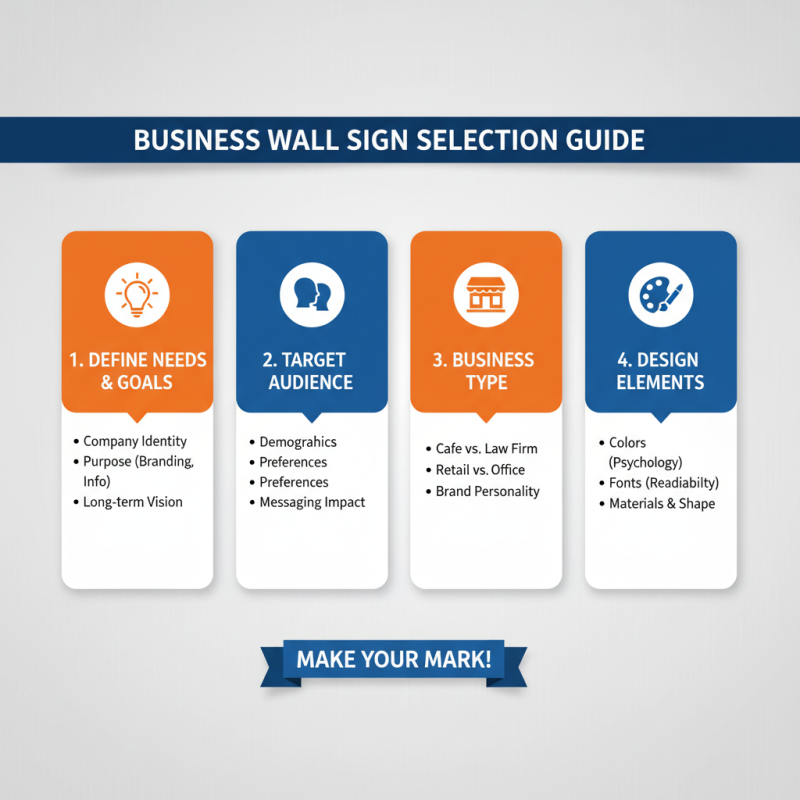
When selecting a business wall sign, it’s important to identify the unique needs and goals of your company. Consider your target audience. Think about their preferences and what messages will resonate. A sign for a vibrant cafe will differ from one for a legal firm. Color choices, font styles, and overall design can make or break your brand perception.
Next, reflect on your business objectives. Are you aiming for brand awareness, directions, or safety information? Each goal requires a different approach. A clear wayfinding sign can reduce customer frustration. A decorative sign may enhance a welcoming atmosphere. Don’t underestimate the power of visible location signs. They can effectively draw foot traffic.
Take a moment to assess your current signage. Is it aligned with your brand identity? If it feels outdated, consider refreshing it. Sometimes, an objective view can help identify flaws. Explore new materials and designs. Collect feedback from employees or customers. Their insights might reveal unexpected needs or areas for improvement.
Selecting the Right Materials and Durability Features
Selecting the right materials for your business wall sign is crucial. Different materials offer various benefits. For instance, acrylic signs are popular for their clarity and modern look. According to a recent industry report, signs made from acrylic can last up to 10 years outdoors. However, they can scratch easily, which may detract from their appearance over time.
Wooden signs give a rustic feel. They can endure wear but require regular maintenance. A survey showed that wooden signs typically last about 5 to 7 years, depending on weather exposure. Selecting the wrong finish can lead to fading. Metal signs are durable and weather-resistant, lasting over 15 years. Yet, they might rust if not cared for properly.
Durability features matter. Ensure your signs can withstand seasonal changes. UV protection is vital for colors remaining vibrant. Reflective materials can enhance visibility at night. Consider the environment before finalizing your choice. Will it be indoors or outdoors? Each setting influences material lifespan. Mistakes in selection can lead to unplanned expenditures. Think carefully about your important needs and the environment.
Choosing the Appropriate Size and Placement for Visibility
When selecting a business wall sign, size and placement are critical for maximizing visibility. Research shows that the human eye can identify a sign from over 500 feet away if it is appropriately sized. A well-placed sign can capture attention and draw in potential customers. However, a sign that is too small may go unnoticed, wasting your investment.
Consider the distance from which people will view the sign. For example, if it's near a busy road, larger signs are often more effective. A report from the Sign Research Foundation indicates that 70% of customers who are asked recall seeing a sign within the last few weeks. This emphasizes the need for your sign to be both large enough and positioned in sight lines, ideally at eye level.
Placement requires careful consideration of nearby obstacles. Trees, buildings, and other signs can obstruct visibility. Be mindful of how the changing environment might affect sign visibility. Regular assessments of where signage stands can provide insights into necessary adjustments. Failure to do so might lead to diminished visibility over time, undermining the sign's purpose.
Design Considerations: Fonts, Colors, and Branding Elements
When designing a business wall sign, font choice is crucial. According to a 2022 report from the Sign Research Foundation, nearly 70% of consumers base their perception of a brand on its signage. Simple fonts often enhance readability. Decorative fonts may look attractive but can confuse onlookers. Avoid overwhelming styles. The key is clarity.
Color psychology plays a significant role in branding. A study by the Institute for Color Research found that color can increase brand recognition by up to 80%. Colors evoke emotions and associations. For a calm, trustworthy vibe, consider blues and greens. Vibrant colors like red and yellow can grab attention but may overwhelm. Finding the right balance is essential.
Branding elements, like logos or taglines, should be consistent. Inconsistent messages can confuse customers. A 2023 survey revealed 60% of consumers prefer brands that maintain a cohesive visual identity. Ensure your sign aligns with other marketing materials. If mismatched, it can lead to distrust. Reflection on these aspects can significantly impact your sign's effectiveness.



 Inquiry
 Email
Email WhatsApp