Finding where to buy Personalised Led Signs in China starts with understanding what your project needs. A compact desk sign, a bright shop display, and a custom-shaped logo each require different materials and lighting. Before requesting prices, note your preferred dimensions, colors, mounting method, and indoor or outdoor use. Details matter.
Chinese manufacturers and trading companies may both offer custom LED signage, but their services can differ. Ask who handles design, fabrication, quality checks, and export packing. Request clear product specifications, including the sign’s materials, power supply, brightness options, and control method. Photos help, but they cannot show every detail. A sample or production video may provide better evidence of finish and workmanship.
Compare more than the quoted unit price. Check minimum order quantities, setup charges, packaging, shipping terms, lead times, and warranty conditions. Ask for a written quotation and confirm that it matches your approved design. If a supplier avoids specific answers, treat that as a reason to pause and investigate. Not every attractive sample represents consistent production; this is easy to overlook when deadlines are tight.
A dependable sourcing decision comes from verifiable details, practical communication, and realistic expectations. Read recent buyer feedback, request relevant project examples, and clarify how defects or delays are handled before paying a deposit. This guide explains what to check when choosing a supplier in China, so you can compare options with greater confidence and avoid relying on photographs alone.
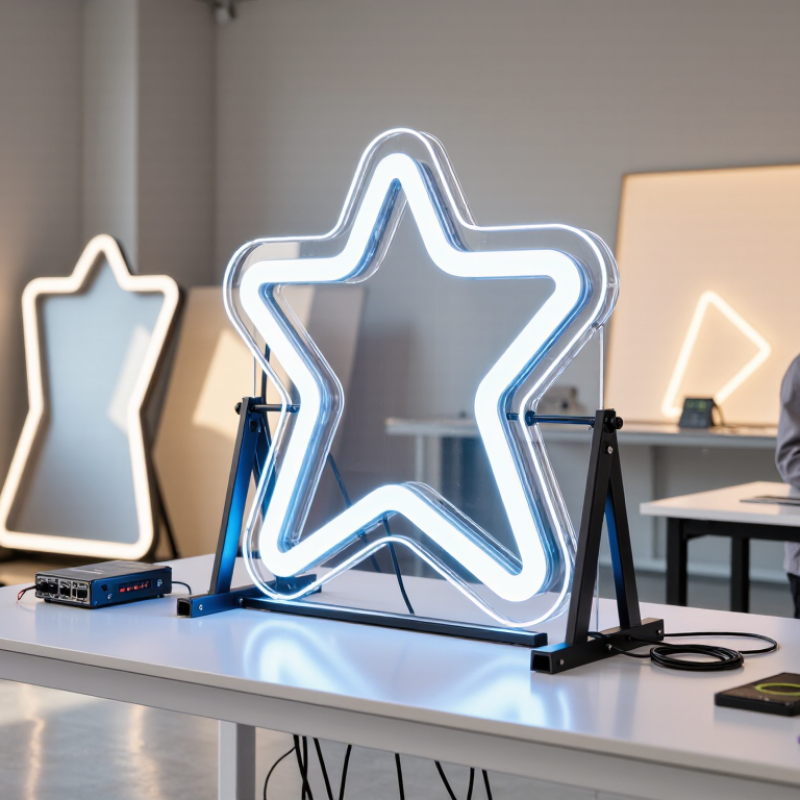
Chinese manufacturers produce several personalised LED sign types, from compact desk plaques to large storefront displays. Common options include acrylic edge-lit signs, LED light boxes, channel-letter signs, flexible neon-style signs, and programmable pixel displays. Buyers can specify text, dimensions, colour temperature, brightness, mounting holes, and power supply.
For example, a reception sign may use frosted acrylic with softly lit lettering, while a shop window may need brighter, weather-resistant construction.
Small details matter. Ask for a sample or a short video showing illumination in a dim room; a polished daytime mock-up can hide uneven light diffusion.
MarketsandMarkets valued the global digital-signage market at USD 28.83 billion in 2024 and forecast USD 45.94 billion by 2029. That forecast describes the wider market, not China-made personalised signs specifically.
When comparing factories, request material thickness, LED spacing, wiring diagrams, and a clear production drawing. Confirm whether the quoted unit includes a power adapter and mounting hardware. I would still check colour consistency across multiple units; photos alone can be misleading.
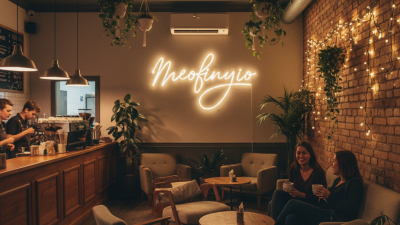
Where to Buy Personalised LED Signs in China?
Where to Buy: Chinese Factories, OEM Suppliers, and B2B Platforms
Chinese factories suit buyers who need custom dimensions, colors, lettering, or mounting holes. Ask for a quotation that separates sign production, packaging, and shipping. Request a sample or a short video showing the lights switched on. Check the diffuser, cable exit, and finish around each edge. A polished catalogue is useful, but it cannot prove consistent workmanship.
OEM suppliers can coordinate design and production when you need packaging or a repeatable product specification. B2B platforms make it easier to compare suppliers, but listings may not reveal who actually manufactures the sign. China’s Ministry of Commerce reported cross-border e-commerce trade of 2.38 trillion yuan in 2023, up 15.6%. This broad figure shows the channel’s scale; it is not a measure of LED-sign quality. Ask suppliers for production photos, lead times, and clear responses about revisions. Small details matter.
Tips: Send a drawing with exact dimensions and mounting points. Confirm the sample’s color and brightness before approving a larger order. Even a careful checklist can miss a detail, so keep written specifications.
Where to Buy Personalised LED Signs in China? How to Verify Suppliers Using ISO 9001 and Product-Safety Standards
When sourcing a personalised LED sign in China, verify the factory behind the quotation, not just its trading profile. ISO’s 2022 Survey recorded 1,265,216 valid ISO 9001 certificates worldwide. That scale makes verification essential: a certificate alone does not prove a specific sign is safe or consistently made. Ask for the certificate number, issuing body, validity dates, covered factory address, and scope. Confirm these details directly with the issuer or its accreditation directory. The scope should cover relevant manufacturing activities, not simply sales.
Look closely. Request inspection records for wiring, power supplies, solder joints, and finished signs. For product safety, ask for test reports tied to the exact model and electrical configuration you plan to buy. Standards such as IEC 60598-1 may be relevant when a sign falls within its scope; applicability depends on the product’s construction and intended use. Check the test laboratory’s competence, including ISO/IEC 17025 accreditation, and compare report model numbers with your sample. A report for a similar-looking product is not enough. One uncomfortable reality: tidy paperwork can still hide inconsistent production. Before a large order, approve a pre-production sample and agree on measurable checks, such as brightness, cable length, and enclosure finish.
When sourcing personalised LED signs in China, compare specialist manufacturers by their lighting specifications, customisation options, and quality checks. Ask whether the stated lifespan applies to the LED modules, the power supply, or the complete sign. These parts can age differently. Ask for details.
A 50,000-hour rating is a common benchmark, not a promise that every sign will run that long. At eight hours of daily use, 50,000 hours equals roughly 17 years of operating time. Real performance depends on heat, installation, ventilation, and electrical components. Check how the supplier tested the LEDs and under what conditions. A rating may describe gradual brightness loss rather than total failure, so ask what “lifespan” means in its documentation. That matters.
Request a datasheet, written warranty terms, and photos or video of a sample sign running for an extended period. Confirm that the test covers the finished product, including its driver and enclosure. If possible, inspect a sample in a dim room and look for uneven brightness, flicker, or hot spots. I would not treat a polished specification sheet as proof by itself; test methods are not always explained clearly. Compare the answers before placing a bulk order.
Use 50,000 operating hours as a common comparison benchmark—not a guaranteed service life. The chart shows how long it takes to accumulate those hours at different daily operating schedules.
When comparing personalised LED signs from suppliers in China, ask how the lifetime rating was measured, including operating temperature and drive current. Actual service life can vary with installation, environment, usage, and maintenance.
When sourcing personalised LED signs in China, send a drawing with dimensions, colours, lettering, mounting points, and intended installation location. For IP65 protection, ask whether the rating covers the complete sign or only selected components. IP65 indicates dust protection and resistance to water jets under defined test conditions; it does not mean the sign can be submerged. Ask for a test report or clear photos of the sealed enclosure, cable entry, and connectors. Small gaps matter.
Request a working sample before approving a large order. Check brightness, colour consistency, finish, wiring, and the power supply under realistic operating conditions. Confirm the sample cost, whether it can be credited toward production, and how many revisions are included. Get the minimum order quantity in writing, including any price difference for a small batch. A low MOQ may still involve setup charges.
Ask for lead time from artwork approval and deposit, and clarify whether it includes production only or inspection as well. For shipping, compare air and sea options using packed dimensions and gross weight, not estimates for the bare sign. Confirm protective packaging, delivery terms, tracking, and who prepares export documents. Transit can vary. Build in a buffer; even a carefully checked schedule can slip when artwork changes or a sample needs another round.
| Buying Dimension | What to Specify | Planning Benchmark | What to Confirm Before Ordering |
|---|---|---|---|
| Finding a supplier | Search for manufacturers or export suppliers that make the specific sign type you need, such as acrylic LED signs, channel letters, illuminated logo signs, or flexible LED neon signs. | Compare at least three written quotations using the same artwork, dimensions, materials, lighting, and delivery terms. | Ask for relevant product photos, material details, production capabilities, quality-control steps, and a quotation that identifies what is included. |
| Artwork and sign dimensions | Provide vector artwork where available, exact width and height, colors, font or logo files, mounting orientation, and whether the sign is single-sided or double-sided. | Confirm the final production drawing and dimensions before approving a sample or production order. | Check spelling, color references, viewing direction, mounting-hole positions, cable exit location, and the overall packed dimensions. |
| IP65 protection | State whether the complete sign must be suitable for outdoor exposure and specify the required protection for the sign body, power connections, cable entries, and any external power supply. | Under IEC 60529, IP6X means dust-tight and IPX5 means protection against water jets from any direction under defined test conditions. | Request the exact tested configuration and supporting test documentation. IP65 does not mean the product is suitable for immersion, and installation details can affect protection. |
| Materials and lighting | Specify face and backing materials, thickness, LED type or color, brightness requirements, dimming needs, and the intended indoor or outdoor environment. | There is no single material or LED specification that suits every sign; select them according to size, appearance, exposure, and installation. | Confirm material samples or approved color references, power consumption, voltage, driver location, ventilation needs, and replacement access. |
| Sample or prototype | Ask whether a physical sample, a small prototype, or a pre-production sample is available and whether its cost can be credited toward a later order. | Sample availability, cost, and timing depend on design complexity and materials. A custom prototype may require separate setup or tooling charges. | Agree in writing on sample dimensions, finish, lighting, packaging, approval method, sample charges, and how approved changes will be handled. |
| MOQ | Request the minimum order quantity for the exact design and also ask for prices at several quantities. | Custom sign MOQ varies by supplier, construction, and material. Some suppliers accept single-piece orders; others set a minimum or charge setup fees. | Check whether the quoted MOQ applies per design, size, color, or order, and whether the sample counts toward the production quantity. |
| Lead time | Separate sample time, production time, and dispatch time in the purchase schedule. | Timing varies with artwork approval, materials, order quantity, factory workload, and testing. Obtain a dated estimate rather than relying on a general range. | Confirm when the clock starts, whether weekends or holidays are excluded, what could delay production, and when inspection and packing will be completed. |
| Quality checks | Agree on inspection points for dimensions, finish, lighting, wiring, labels, accessories, and packaging before production begins. | Use an approved drawing or sample as the reference for inspection. Define acceptance criteria before the order is produced. | Ask for production photos or inspection records, and confirm how defects, missing parts, or transit damage are reported and resolved. |
| Packaging | Specify protective wrapping, corner protection, foam or other cushioning, carton labeling, and whether the sign requires a crate. | Packaging should match the sign's size, fragility, shape, and transport route; oversized or fragile signs may need additional protection. | Request packed dimensions and gross weight for freight planning, and clarify who is responsible for packaging requirements for the chosen shipping method. |
| Shipping from China | Compare courier, air freight, and sea freight based on destination, shipment size, urgency, and total landed cost. | Transit time and cost depend on destination, carrier, customs clearance, service level, and shipment dimensions. Obtain a route-specific quote. | Confirm the named delivery point, Incoterm, freight charges, insurance, customs responsibilities, duties and taxes, tracking, and any destination handling fees. |
| Power and compliance | Specify the destination country's electrical requirements, input voltage, plug or hardwiring arrangement, and any required product documentation. | Applicable requirements depend on the destination market, sign design, and electrical components used. | Confirm that the supplied power components and documentation match the destination and installation plan; do not assume a certification applies to every configuration. |
Note: The benchmarks above are general purchasing guidance, not guaranteed supplier terms. MOQ, pricing, sample availability, production schedules, protection claims, and shipping times must be confirmed in a written quotation for the specific sign and destination.