Top 10 Best Business Wall Signs for Effective Office Branding?
In today’s competitive business landscape, effective branding is crucial. A striking Business Wall Sign can enhance your company’s visibility. Research indicates that 68% of consumers base their perception of a brand on visual identity. Thus, wall signs should reflect your core values.
Consider the impact of texture and color. Studies show that well-designed signs can increase customer engagement by up to 30%. However, not every sign is effective. Some companies overlook essential design principles, leading to wasted resources.
Visuals should tell a story. A Business Wall Sign needs to resonate with the audience’s emotions. Companies should regularly assess their signage’s effectiveness and adapt when necessary. Reflecting on what works and what doesn’t is vital. Your signage is more than just a sign—it’s an experience.
Factors to Consider When Choosing Business Wall Signs
Choosing the right business wall signs is crucial for effective office branding. Several factors warrant consideration to ensure they resonate with your audience. Visibility is key; signs should be clear and easily readable from a distance. According to a report by the Sign Research Foundation, 76% of customers enter a store they have never visited before based on its signage. This statistic underscores the importance of well-placed, high-quality signs.
Color psychology also plays a vital role. Different colors evoke specific emotions. Blue often conveys professionalism, while yellow is associated with optimism. It's essential to match your sign colors with your brand's message and target audience. Research from the American Marketing Association found that color can increase brand recognition by 80%. Therefore, thoughtful color selection can significantly impact your office's branding effectiveness.
Tip: Always consider the placement of your signs. High-traffic areas ensure maximum exposure. Additionally, assess local regulations or restrictions regarding sign dimensions and materials. Reflect on your brand’s essence—are your signs authentic representations of your values? They should not be merely decorative but should communicate your mission and vision effectively. Remember, a sign is often the first impression you give to potential clients. Don't overlook its importance.
Types of Wall Signs That Enhance Office Branding
When enhancing office branding, wall signs play a crucial role. They communicate values and create an engaging atmosphere. Choosing the right type of wall sign can set the tone for your workspace. There are several types you can consider, from motivational quotes to directional signs.
Inspirational signs can motivate employees. They can make the workplace feel positive. Think about where these signs should go. Placing them in high-traffic areas makes sense. However, sometimes they can be too cluttered or confusing. Simple designs usually work best.
Wayfinding signs help visitors navigate your office. Clear signage reduces stress and improves the visitor experience. Ensure that they are easy to read from a distance. But, avoid overcrowding with too much information. It may lead to misunderstanding. Less is often more when designing office signs.
Materials and Designs for Effective Business Signage
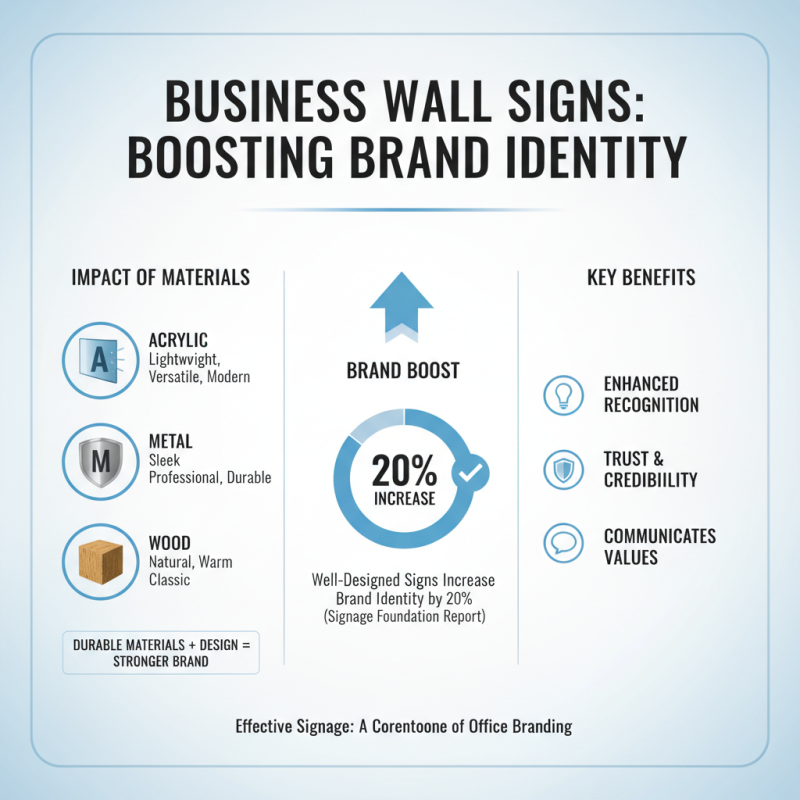
Effective business wall signs play a crucial role in office branding. The materials used for signage significantly impact how they are perceived. A recent report from the Signage Foundation highlights that well-designed signs made of durable materials can increase brand identity by 20%. Materials like acrylic, metal, and wood each offer unique aesthetics and durability. For example, acrylic is lightweight and versatile, while metal provides a sleek and professional look.
Design is equally important. A clean and readable design can enhance communication. Using bold fonts and contrasting colors helps make signs more visible. According to a study by the International Sign Association, 76% of consumers have entered a business they had never visited before based purely on its signs. This underscores the importance of investing in high-quality signage.
However, many businesses overlook the strategic placement of their signs. Signs should be positioned where they can easily capture attention. A cluttered environment can detract from the sign’s impact. Reflecting on how signs are displayed can lead to better branding outcomes. Optimal signage requires ongoing evaluation and adaptation to ensure it aligns with brand messaging.
Placement Strategies for Maximum Visibility and Impact
When it comes to office branding, placement matters. Wall signs need to grab attention. Consider high-traffic areas like entrance halls or break rooms. These locations ensure maximum visibility. Think about eye level too. Signs should be easily readable without craning necks. A sign too high may go unnoticed.
Color choices can affect visibility. Bold colors stand out against neutral backgrounds. Combine text and images for increased engagement. Remember, less is often more. Cluttered signs confuse viewers. A simple message is more memorable. Test different layouts to find what works.
Placement isn’t just physical; it’s strategic. Ensure signs reflect company values. Align messages with your brand identity. If signs don’t resonate, they lose impact. Regularly assess their effectiveness. Freshen up the placement and design periodically. Keeping signs relevant keeps them effective.
Examples of Successful Office Branding Through Wall Signs
Wall signs can significantly impact office branding. Many companies overlook their potential. A well-designed wall sign can enhance the workplace atmosphere and communicate brand identity. According to a report by the Sign Research Foundation, nearly 60% of consumers enter a business they have never visited before because of its signs. This highlights the importance of visual branding.
Colors and fonts matter. They evoke emotions and impressions. For example, blue often conveys trust, while red signifies excitement. Using the right color scheme can lead to a 73% increase in brand recognition, as noted by the creatives in branding studies. Choose designs that reflect your company values. However, many businesses fail to consistently apply their branding. This inconsistency can lead to confusion among clients and employees.
Tip: Keep designs simple. Overly complex signs can create cognitive overload.
Incorporate your mission statement in your signage design. This can establish a deeper connection. Employees and clients alike appreciate seeing core values displayed. A study found that workplaces embracing their values can see up to a 30% increase in employee productivity.
Tip: Regularly review and update your signage.
Outdated signs can hinder brand perception. They may signal neglect or unprofessionalism. Reflect on what your signs communicate and adjust accordingly.



 Inquiry
 Email
Email WhatsApp